Case study: how ergono3d grew search traffic with our own AI-readiness playbook
TL;DR: We ran citeproduct's own AI-readiness playbook on our site, ergono3d.com. Over three months, Google Search Console clicks rose 49% and impressions 82%. Here's exactly what we changed, and what the data does and doesn't prove.
We built citeproduct because we were tired of tools that hand you a score and walk away. So before we opened it to everyone, we did the obvious thing: we ran its playbook on our own site.
Here's what happened, with the real Google Search Console numbers and exactly what we changed.
What did ergono3d's search look like before?
Through early spring, ergono3d's search traffic was flat. A handful of clicks a day, impressions bouncing around with no trend. A normal small site that was technically fine but wasn't structured the way AI engines and modern search read a page.
What we did (the citeproduct playbook)
We applied seven citeproduct fixes:
- llms.txt at the root: a clean Markdown map of the content we most want models to read (we used our free llms.txt generator).
- Schema (JSON-LD): Organization and FAQ structured data so engines know what each page is.
- Answer-first structure: the direct answer in the first ~30% of each page, opening sections with a plain "X is …" definition instead of marketing throat-clearing.
- Quotable, sourced passages: real statistics with citations, the kind of self-contained lines an engine can lift verbatim.
- FAQ sections that answer the questions buyers ask.
- Crawlability basics: sitemap, robots, and AI-crawler policy all clean.
- Multilingual coverage: the same readiness applied per language, not just English.
Every one of these is something the tool tells you to do and hands you ready to paste. We just pasted them, and the curve started climbing within a few weeks of the work shipping. You can see where your own site stands and get the same fixes with a free scan.
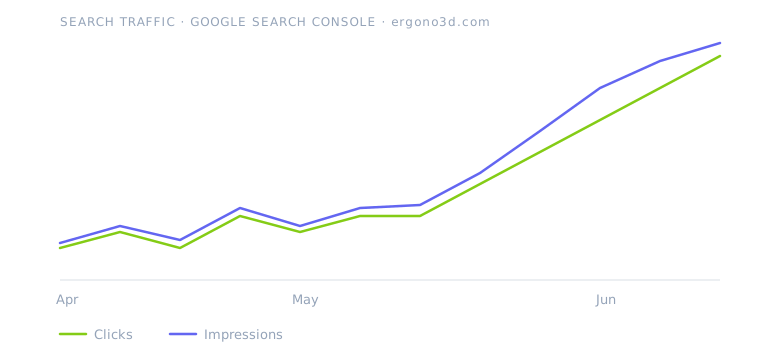
The results: clicks +49%, impressions +82%
Google Search Console, ergono3d.com (real, exportable data):
| Window | Clicks | Impressions |
|---|---|---|
| Last 3 months | 344 (↑ 49%) | 6,180 (↑ 82%) |
| Last 28 days | 176 (↑ 60%) | 4,230 (↑ 76%) |
Over the last 28 days, average CTR sat around 4.2% and average position around 11.3. Both clicks and impressions kept climbing week over week, with the steepest part of the curve in June, after the readiness work was in place.
These aren't huge absolute numbers. ergono3d is an early-stage site. The point is the direction and the slope: a flat line that turned into a climb once the page was structured to be understood and quoted.
What this is, and what it isn't
We hold ourselves to the same rule the product does: no invented numbers, no overclaiming.
- This is Google Search Console data: Google Search clicks and impressions, not AI citations. The AI-visibility side is complementary; this is the part we can prove with public, verifiable data.
- It's correlation, not a controlled experiment. We did the work; over the same window traffic rose. We can't isolate it as the only cause, and we won't pretend to.
- The underlying numbers are real and exportable from Search Console.
Why we're sharing this
It worked, so we're handing it to everyone.
We didn't want to launch a tool we hadn't put our own site through. Now that we've done that, and seen a real flat-to-climbing curve, we're opening citeproduct so anyone can run the same playbook on their own pages: the same diagnosis, the same copy-paste fixes.
If you run a site, that's the invitation. Scan a page, get the fixes, paste them in, and watch your own curve.
FAQ
Does this prove citeproduct caused the growth?
No, and we won't claim that. These are Google Search Console numbers over the same window we did the work; search has many inputs and we can't isolate one cause. What we can say: we applied the readiness playbook, and over that window traffic moved in the right direction. We're sharing the real numbers and the exact actions so you can judge for yourself.
Isn't Search Console about Google, not AI search?
Yes. GSC measures Google Search clicks and impressions, not AI citations. The same fundamentals (answer-first structure, quotable sourced passages, schema, llms.txt, clean crawlability) strengthen both classic search and how AI engines read a page. This case study shows the classic-search side, because that's what we can measure with public, verifiable data today.